
E-Commerce · Shopify
Why Win-Back Emails Should Start With the Last Purchase
For Shopify merchants trying to increase lifetime value, the easiest win-back mistake is also the most common: opening with a discount before reminding the customer what they actually bought. That...
For Shopify merchants trying to increase lifetime value, the easiest win-back mistake is also the most common: opening with a discount before reminding the customer what they actually bought.
That approach can work sometimes, but it is usually too generic. A one-time buyer did not leave a blank slate behind. They left behind a product, a use case, and a buying moment. If the first message ignores that context, it starts the conversation in the wrong place.
At GreenWard, we think a better win-back email starts with the last thing the customer bought.
Start with product logic, not pressure
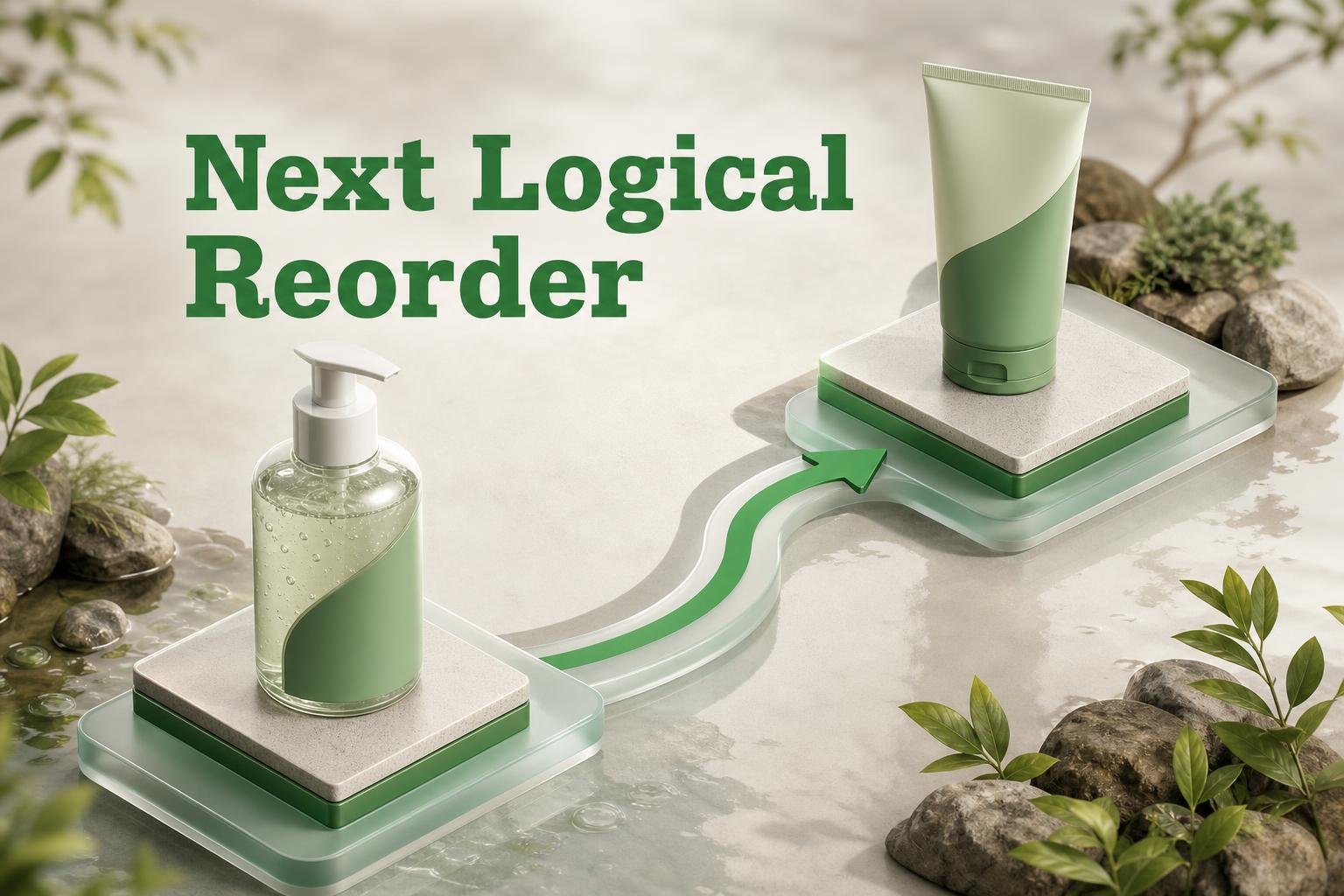
If someone ordered a cleanser once, the next message should not feel like a random blast. It should make the next step obvious. Show the matching product that usually comes after it, explain why it belongs in the routine, and give one clear path back to checkout.
That is much more useful than a generic “come back” offer. It respects the customer’s original intent and helps them move forward instead of asking them to rethink everything from scratch.
This is especially important for stores that sell replenishable products. A customer who bought something with a natural follow-up pattern needs a different message than someone who bought a gift or a one-off item. The follow-up should match the original use case, not the calendar.
Why one-size-fits-all win-back flows underperform
Too many win-back flows treat all lapsed buyers the same. The result is a message that may be timely, but not relevant. And relevance is what makes a second order feel natural.
Think about the difference between these scenarios:
Replenishable item: The customer likely needs another purchase, but only if the next message feels connected to the first one.
Gift or one-off product: The customer may not need the same item again, so the next step should not assume repeat demand.
When the flow is built around product logic, it becomes easier to send the right message at the right moment. That means the email can do more than chase a return visit. It can guide the customer toward the next sensible purchase.
What a better win-back flow looks like
For Shopify stores, the structure is simple: build win-back flows around what was bought, what usually comes next, and when it makes sense to ask again.
That does not mean every email needs to be long or complicated. It means the message should answer three questions quickly: what did they buy, what should they consider next, and why does it matter now?
When those three pieces line up, the email feels less like a discount request and more like a helpful continuation of the shopping experience. That is a stronger place to start, especially if the goal is to increase lifetime value without training customers to wait for a deal.
At GreenWard, we see this as a retention problem with a merchandising answer. The strongest win-back flows are not built around urgency alone. They are built around product relationships.
Make the second order feel obvious
The best retention systems do not force a second purchase. They make it feel like the natural next step. That starts with understanding the first order and using it to shape the next message.
If the customer bought a cleanser, show the next product in the routine. If the item is replenishable, time the follow-up around that reality. If the original purchase was a gift or a one-off, adjust the message accordingly. The point is not to send more email. The point is to send a better one.
That is how win-back flows become more than a recovery tactic. They become part of a smarter retention strategy.
For merchants who want their flows to do more than offer a bigger discount, the answer is simple: start with the last purchase, and build from there. To see how we think about retention and lifetime value, visit our website.


