
E-Commerce · Shopify
Why the Post-Purchase Window Drives Repeat Sales
For Shopify brands, the biggest growth opportunity is often hiding in plain sight. We spend so much energy winning the first sale that it becomes easy to treat the moment after checkout like the...
For Shopify brands, the biggest growth opportunity is often hiding in plain sight. We spend so much energy winning the first sale that it becomes easy to treat the moment after checkout like the finish line. In reality, that post-purchase window is where a lot of lifetime value is won or lost.
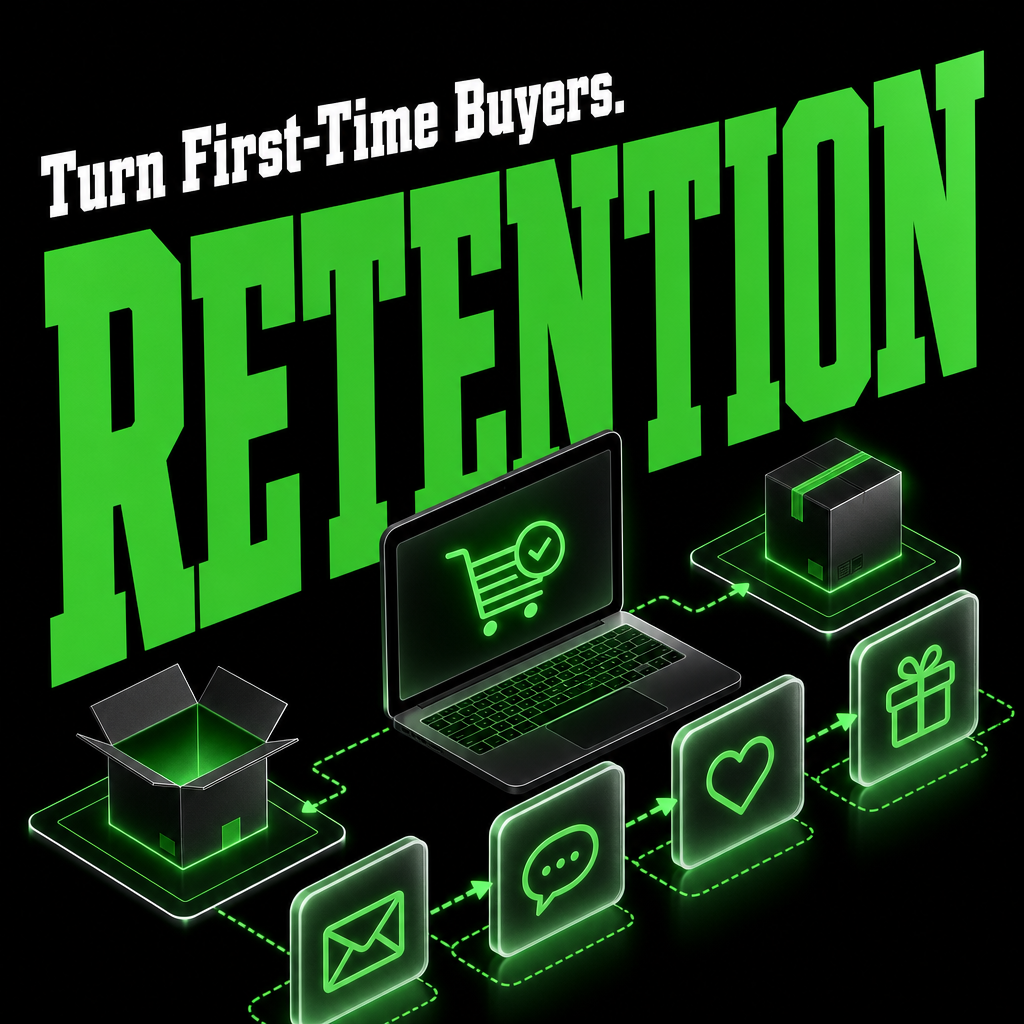
That is the core issue behind retention for DTC brands: strong acquisition means little if first-time buyers are not guided toward a second purchase. If we only celebrate the sale and hope customers come back on their own, we are leaving repeat revenue to chance. And chance is not a strategy.
Retention Is Not a Side Project
Too often, retention gets framed as something to think about later, after traffic is flowing and acquisition is dialed in. But the brands that grow steadily understand that retention is part of the same system. The post-purchase experience is not just a support function. It is a growth channel.
That shift in mindset matters. When we treat the post-purchase window like an afterthought, we miss the chance to build momentum while the customer is still engaged. When we treat it like a channel, we start asking better questions: What happens after the order confirmation? How do we keep the relationship moving forward? What makes a first-time buyer feel like they made the right decision?
Why First-Time Buyers Often Disappear
Most Shopify merchants know the pain of a strong first sale followed by silence. The customer buys once, then vanishes. That does not always mean the product failed. More often, it means the brand did not create enough reason to return soon enough.
This is where a lot of retention work gets misunderstood. It is not only about discounts, and it is not only about sending more emails. It is about using the time after purchase to reinforce trust, keep the brand top of mind, and make the next order feel natural instead of forced.
That is where the real leak lives. Not in the checkout itself, but in the gap between purchase one and purchase two.
What Stronger Repeat Purchase Thinking Looks Like
Brands that improve lifetime value usually do one thing well: they stop assuming repeat purchase will happen by default. They design for it.
That means looking at the post-purchase window as a sequence of small moments, not a single message. It means thinking about how our brand shows up after the sale, how we stay relevant, and how we make the next step obvious without being pushy.
For Shopify merchants, this is especially important because acquisition costs do not get easier simply because we want them to. The more we can increase repeat purchase, the more efficient the whole business becomes. That is why retention deserves the same level of attention as paid media, creative, and conversion rate optimization.
At GreenWard, we believe this is one of the clearest ways to build healthier growth. If the first purchase is the start of the relationship, then the post-purchase window is where that relationship either deepens or fades. Learn more about our approach at GreenWard.
Turn the Window Into a Growth Channel
The question is not whether customers can come back. The question is whether we are creating the conditions for them to do so. When we stop celebrating only the sale and start optimizing what happens after it, repeat purchase stops being a hope and starts becoming a system.
That is the shift we want more Shopify brands to make. Acquisition gets the attention, but retention compounds the result. If we are serious about increasing lifetime value, we need to treat the post-purchase window like the growth channel it really is.
If that is where the leak is, that is also where the upside is. For more perspective on building a stronger retention engine, visit our site.


