
E-Commerce · Shopify
Why Post-Purchase Emails Shouldn’t All Do the Same Job
Too many Shopify stores treat post-purchase email like a single follow-up sequence that just keeps reminding customers the product exists. That approach misses the point. A strong post-purchase...
Too many Shopify stores treat post-purchase email like a single follow-up sequence that just keeps reminding customers the product exists. That approach misses the point. A strong post-purchase flow should not send every message with the same job, especially when the product is replenishable and the goal is to increase lifetime value.
At GreenWard, we think about post-purchase timing the same way we think about retention strategy overall: each email should move the customer forward for a specific reason. If every message feels like a reminder, the flow gets noisy fast. If each message has a distinct purpose, the sequence feels helpful, relevant, and much more likely to support repeat purchase behavior.
The first email should reduce doubt
The first message after purchase is not the place to push the next order. It should confirm the order and calm any uncertainty. Customers want reassurance that everything went through correctly. That early moment is about clarity, not urgency.
When the first email does its job well, it creates trust. That trust matters because a customer who feels confident about the purchase is more likely to engage with the rest of the flow instead of ignoring it. For Shopify merchants, that is the foundation of better retention.
The second email should help the customer use the product well
The next email should not be another generic check-in. It should help the customer get value from the product with one practical tip. That small shift changes the tone of the entire flow. Instead of asking for attention, the brand is giving it.
This is where many DTC brands can improve the customer experience without adding complexity. A simple, useful message can reinforce product satisfaction and keep the brand top of mind. When customers understand how to use the product well, they are more likely to keep using it well. And when they keep using it, they are more likely to reorder.
The refill email should wait for the right moment
This is the part that most stores get wrong. The refill email should not be tied to a fixed day count alone. A calendar-based reminder can be too early for one customer and too late for another. If the product lasts three weeks, a refill nudge on day 7 feels pushy. If it lasts six weeks, a day 30 reminder can arrive after the customer has already moved on.
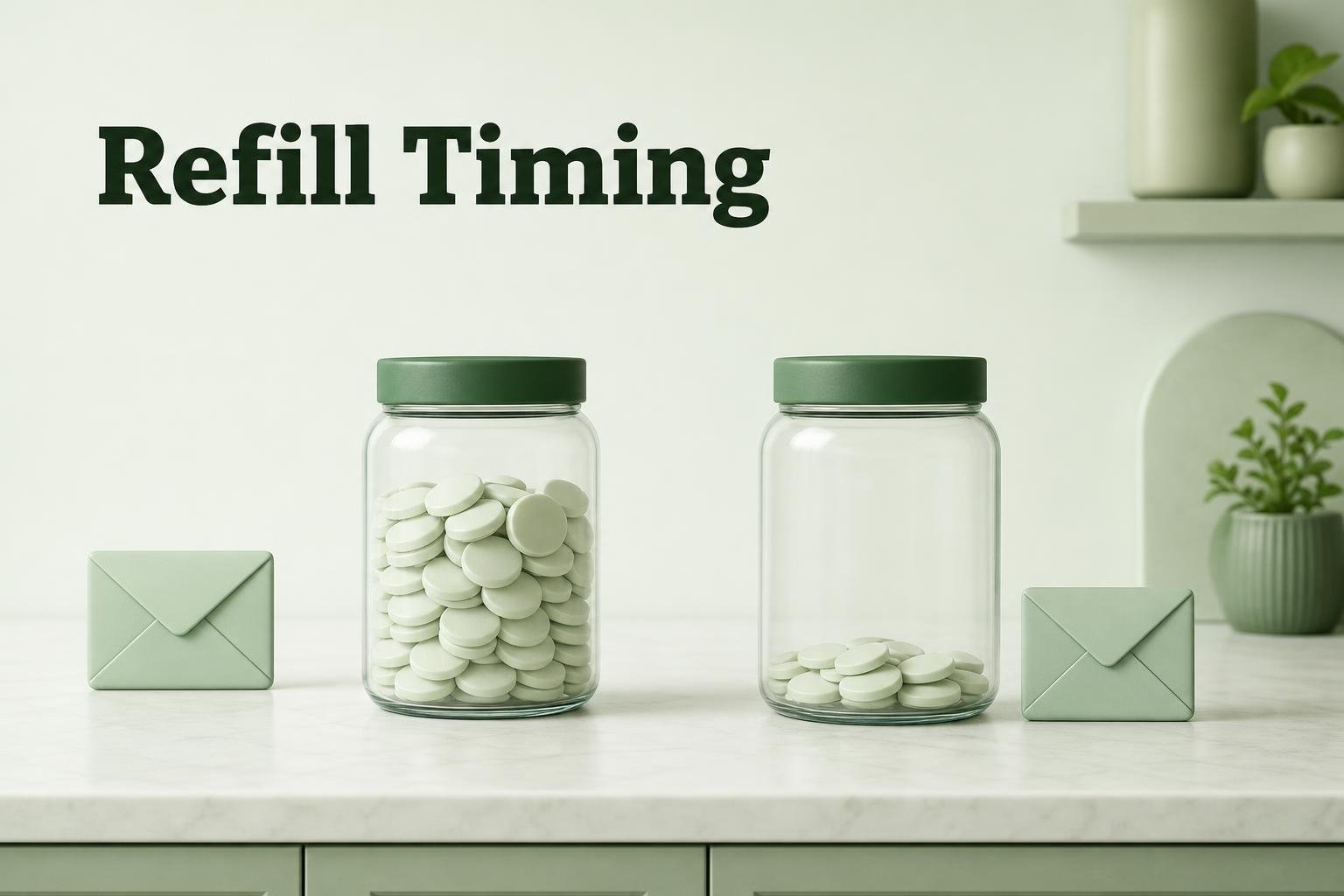
The better approach is to time the refill email around how the product is used, how fast it runs out, and when customers usually reorder. In other words, the email should show up when the customer is actually noticing the jar is nearly empty. That is the moment when the message feels useful instead of intrusive.
This is also where a lot of repeat revenue is won or lost. The best second order is often not created by a louder reminder. It is created by a smarter one. When the timing matches the customer’s real usage pattern, the refill email lands at the right moment and supports the natural reorder decision.
Build post-purchase flows around behavior, not just dates
For Shopify merchants trying to increase lifetime value, this is a simple but important shift. Post-purchase flows should be built around what the customer needs at each stage, not around a fixed sequence that treats every email the same. Confirmation, education, and refill timing are three different jobs, and each one deserves its own message.
That is the logic behind the post-purchase systems we build at GreenWard. We design flows around timing that reflects product use, not just a calendar. If the goal is more repeat orders, the sequence has to feel relevant when the customer is ready, not when the automation says it is time.
For merchants who want a practical place to start, the question is simple: what should each email actually do? Once that is clear, the rest of the flow becomes much easier to improve. If you want to see how we think about retention and post-purchase strategy, visit GreenWard. And if you are ready to build a smarter sequence for your store, start with our approach to post-purchase flows.


